


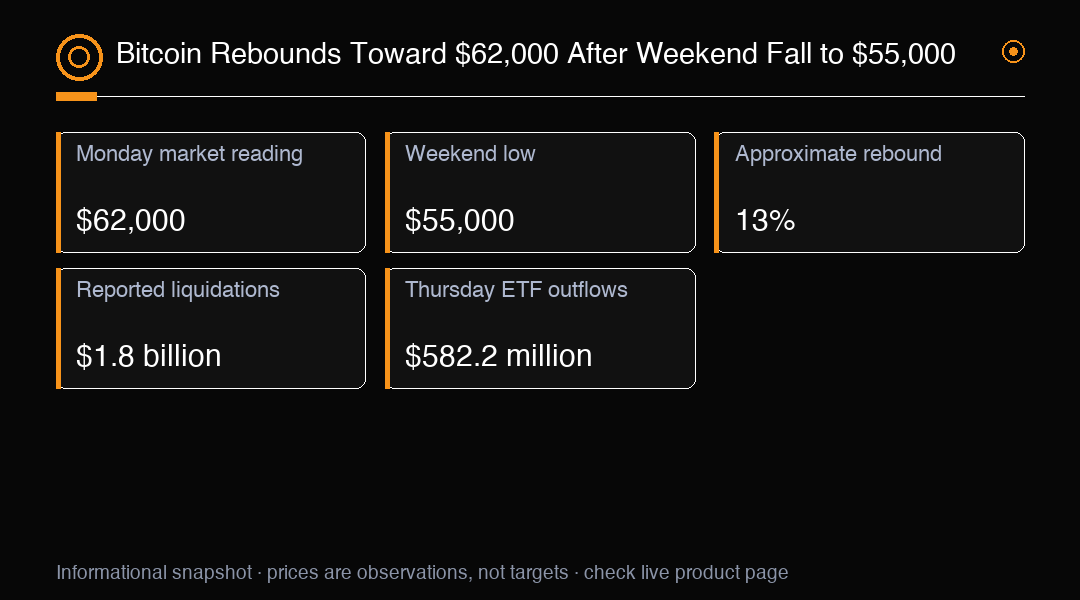
Bitcoin recovered toward $62,000 on Monday, November 23, after falling to around $55,000 in thin weekend trading. Using those rounded price references, the rebound was about 13% and followed a selloff that took Bitcoin to its weakest level since September 2024. Other major cryptocurrencies also turned higher as the new week began. The speed of the reversal shifted attention from the rush to close leveraged positions to the demand needed to sustain the recovery. The next test is how much of Monday's gain buyers can preserve as holders who sat through the selloff get a chance to trim positions at higher prices.
The weekend selloff produced about $1.8 billion in reported crypto liquidations, predominantly in positions betting on higher prices. The figure is an estimate across reporting venues, with coverage varying by platform. When a leveraged long falls below its required margin, the platform can force it closed, adding another sell order to a falling market. A series of closures can amplify the original decline. Each round of sales can push prices toward the margin thresholds of other traders and trigger further selling. In thin trading, fewer orders may be available to absorb that burst near the prevailing price.
Once the most intense round of forced selling passes, bids can lift prices against a smaller queue of sellers. Traders taking profits on short positions may add to the rebound because closing those trades also requires buying. Those purchases end when the positions close. Spot buyers can provide a different kind of support if they continue adding exposure after the initial reversal. The size of Monday's move leaves room for several of these forces to have operated at once. How readily buyers absorb fresh sell orders as the pace of the rebound slows will help distinguish between them.
US spot Bitcoin exchange-traded funds recorded $582.2 million in net withdrawals on Thursday, taking November outflows through that session to $3.5 billion. The cumulative figure puts Thursday's redemptions in the context of a broader stretch of withdrawals from US-listed funds. It measures one channel of demand, alongside spot trading elsewhere, offshore activity and derivatives. The period covered also matters. The funds were closed during the weekend selloff, so Thursday's figures describe investor behavior ahead of the price break. Fund activity after the weekend will show whether investors in those products respond to the recovery by adding exposure or continue to withdraw money.
On the daily chart, the $55,000 area marked a third touch of the lower boundary of a descending channel. The boundary is a chart-derived reference drawn through earlier lows, and its downward slope puts the rebound in the context of a wider decline. Because the boundary slopes lower, holding above the weekend low and moving away from the channel floor are distinct developments. A daily close farther from that edge would show that the price held its ground beyond the initial turn. Trading volume over subsequent sessions can help gauge participation in that move. A lasting bottom remains unconfirmed.
Ether recovered to around $1,700, and other large tokens rose from their weekend lows. When traders reduce leveraged exposure across several markets at once, the easing of that pressure can also lift several tokens together. The breadth of Monday's bounce gives traders a way to assess what happens after that initial relief. If Bitcoin keeps rising while Ether and other major tokens give back their gains, the recovery will have narrowed. If several tokens hold their gains as trading continues, demand will have absorbed selling across a wider part of the crypto market, including in assets beyond Bitcoin itself.
US equity futures also recovered early Monday after the previous week's technology-led retreat, giving risk assets a firmer backdrop. The timing separates the two moves. Bitcoin had already traded through its steepest decline by the time equity futures began to reflect the new week's risk appetite. The US cash session offers a further comparison. If equities extend the futures recovery while Bitcoin holds its gains, both markets would be moving in step. If technology shares come under renewed pressure while Bitcoin holds up, the divergence would draw attention to buying within crypto and how well it absorbs sales during that session.
Wednesday's US personal consumption expenditures inflation report was scheduled ahead of Thanksgiving and could influence expectations for the Federal Reserve's December decision. A firmer reading than expected could lead markets to pare back expectations for easier policy. A softer reading could give traders more room to price in rate cuts. Treasury yields and the dollar can help show how much those expectations shift once the figures arrive. The question for Bitcoin is how far a repricing in rates carries into demand for risk assets. The release comes while investors are still assessing how much of the weekend reversal can hold.
US stock markets were scheduled to close Thursday and trade a shortened session Friday, while crypto markets would stay open throughout the holiday. Bitcoin can therefore react to new orders while US-listed spot funds are between sessions. If participation on crypto venues thins out, a wave of orders can move prices farther before meeting enough opposing interest. That matters in both directions after a weekend when forced sales accelerated the decline and the price then reversed sharply. Friday's shortened cash session will offer an initial look at how US market participants respond to any price move that develops during Thursday's closure.
As the week progresses, spot turnover and futures open interest can help explain how the recovery is developing. Steadier prices on stronger spot turnover would suggest buyers are taking up supply as it comes to market. A quick rise in futures open interest would show that outstanding contracts are building again. Open interest counts contracts still in place, and the price and spot activity give that change context. If futures positions rebuild while spot turnover stays subdued, the advance may depend more heavily on derivatives positioning. If spot activity strengthens at the same time, the recovery would be drawing participation from both markets.
Monday's move toward $62,000 gives the market a reference for judging how much of the rebound survives the next stretch of selling. The first reaction to Wednesday's inflation figures may reflect a sudden change in rate expectations, while trading over the holiday will test how readily the market can absorb orders when participation varies. By the next full US stock session, investors will have seen Bitcoin trade through both a scheduled macro release and an uneven market calendar. Where prices settle after those tests will help show whether demand has kept pace with the rebound from the weekend low.
Trading Insight
Watch how Bitcoin handles the next pullback. Steadier prices on active spot volume would suggest buyers are absorbing sales. If futures positions rebuild quickly while spot turnover stays subdued, derivatives positioning may be carrying more of the rebound.